

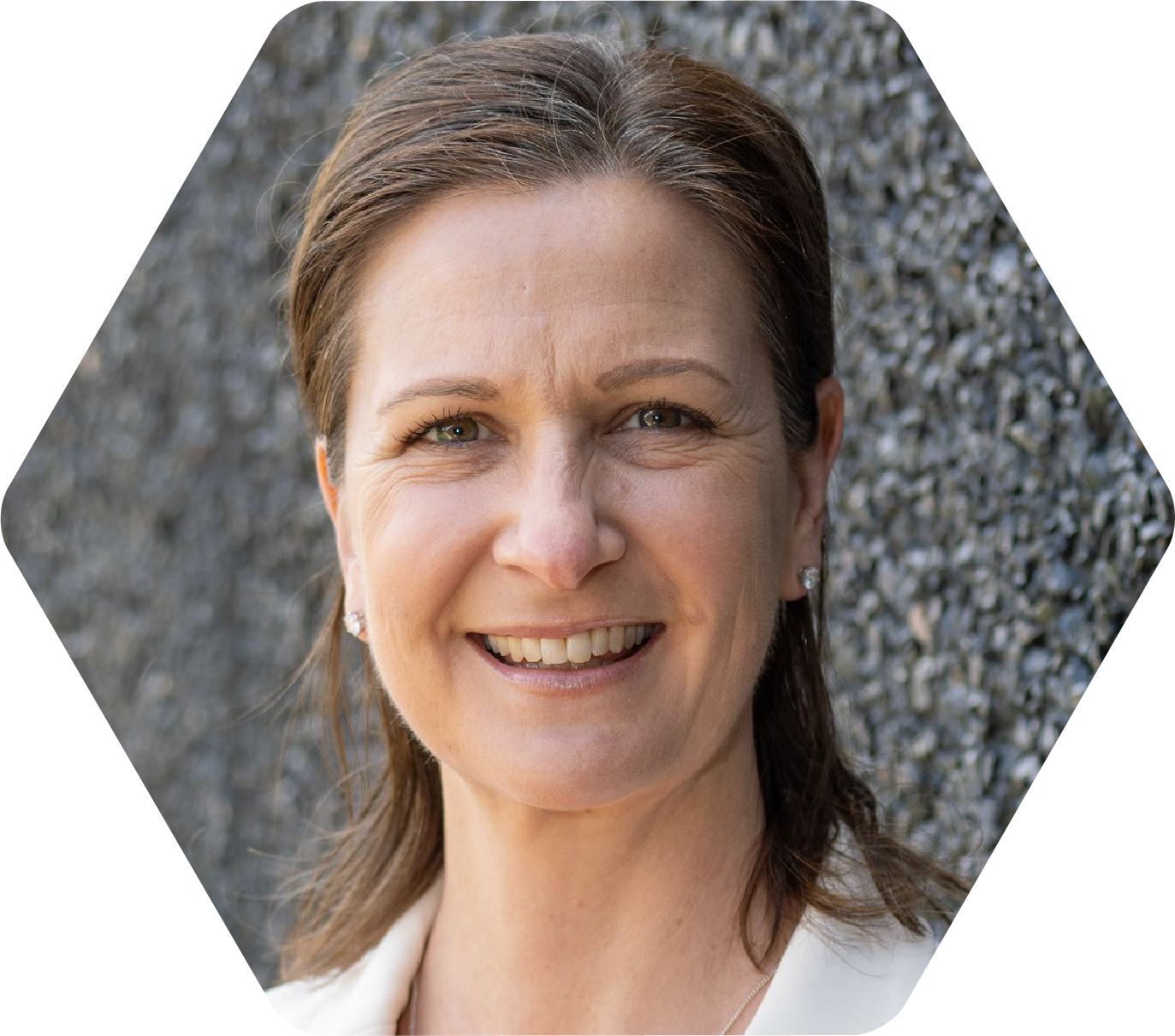
It’s time for Batten disease research updates! BDSRA Foundation’s Head of Research & Medical Affairs, Dr. Ineka Whiteman, breaks down Batten disease clinical program updates, research news, and resources in her quarterly column, as seen in BDSRA’s monthly newsletter, The Illuminator.
With thanks to BDSRA Australia’s Tahmina Tabassum, PhD, for editorial assistance.
An Incredible Week of Connection and Learning
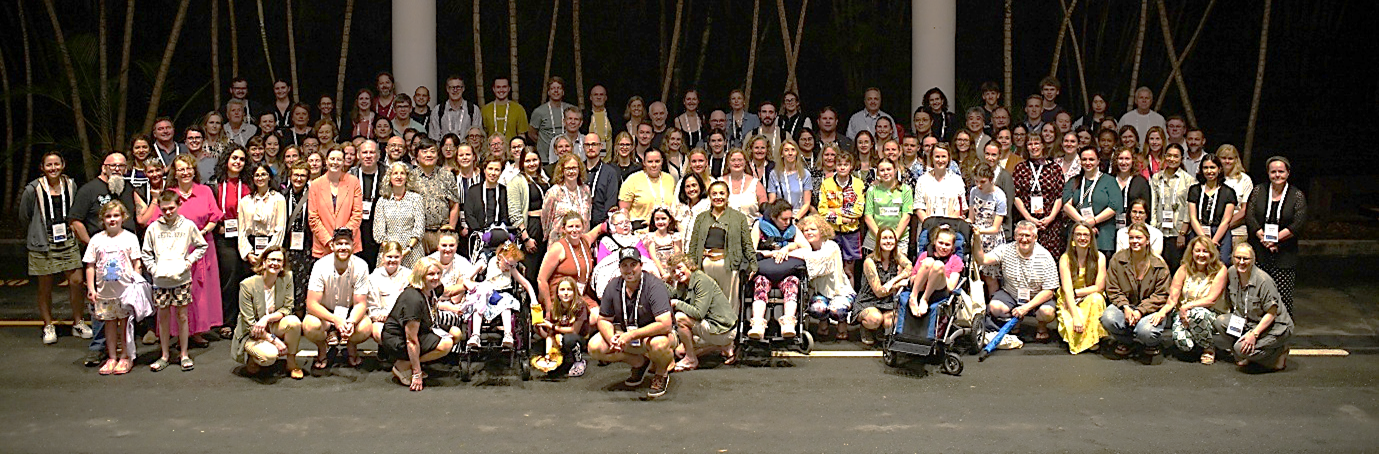
Image: NCL2025 Congress and BDSRA Australia Family Conference delegates
As we reflect on NCL2025 Congress and Family Conference week, we are tremendously grateful and inspired. This year, BDSRA Australia was thrilled to have the unique and rare opportunity to combine our Family Conference with this prestigious international meeting. For two overlapping days, families and caregivers joined the core Congress program, creating a unique space to hear the very latest Batten disease research and clinical developments from the leading researchers, clinicians, and biotech leaders working in the field.
These weren’t just presentations – they were genuine conversations. Families asked questions, shared experiences, and connected informally with experts, while clinicians, researchers, and industry partners gained invaluable insight from the families they are dedicated to serving.
These exchanges were enriching for everyone involved and made this Congress a meaningful step forward for our global Batten community. We hope you enjoy the Congress and Family Conference write-up below (see Research Updates).
Forget Me Knot – A Unifying Symbol
One of the special highlights of the week for me was seeing the interest and engagement with the “Forget Me Knot” dream catcher – a symbol of unity and connection in our global Batten community. Throughout the week, every attendee tied their thread onto the centrepiece:
I described its significance in my Congress Opening remarks:
“This week is about your unique contribution to something extraordinarily meaningful. Science, R&D, medicine — these are your tools, your implements, your piece of the puzzle. Only you can do, very specifically, what you’ve come here to do this week. And your role — the part you play in the bigger picture — is as instrumental as the person sitting next to you. Together, you are each contributing to a tapestry.
The dream catcher before us will become a living symbol of connection, hope for the future, and remembrance of those we’ve lost. We ask every single one of you to tie your thread onto this central piece. As the days unfold, every added knot will weave our shared strength — a visible reminder that we stand together, united in our promise to keep marching forward in our work, and to never forget the children and families forever affected by Batten disease.”
At the close of the NCL Congress and the Family Conference, this dream catcher will be passed from one Batten community to the next — symbolising the connection between science and lived experience, between discovery and hope. The next stop for the dream catcher is the Nordic NCL conference, being held in Malmø, Sweden, from Dec 2-4, where Prof. Jon Cooper will present it to the meeting Chairs.
As always, thank you for your support and dedication to our shared mission.
Warm regards,

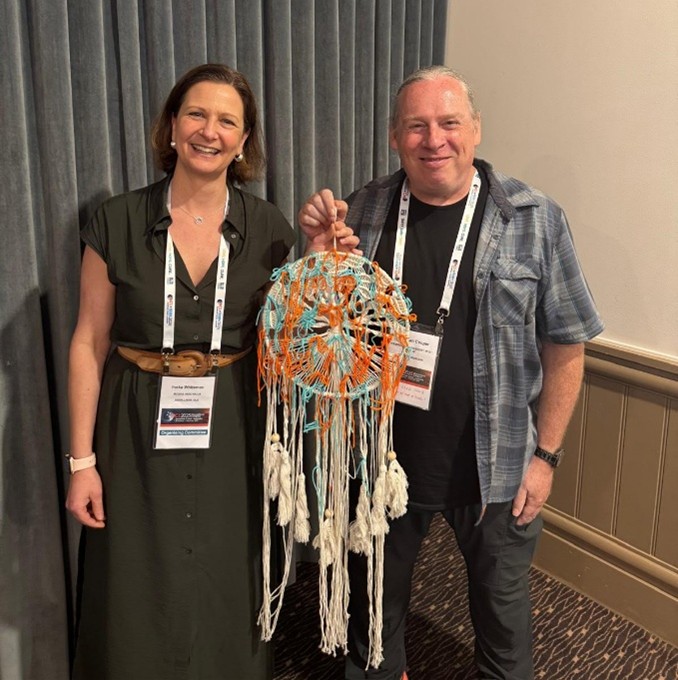
Image: Ineka passing over the Forget Me Knot dream catcher to Prof. Jon Cooper ahead of the Nordic NCL conference in Sweden, Dec 1-3.
RESEARCH UPDATES
NCL2025 Congress and Family Conference Daily Summary and Highlights
NCL2025 Opening – Tuesday, October 28
The Congress opened with a Welcome to Country and formal proceedings before two impactful scientific keynotes.
Prof. Fran Platt explored therapeutic mechanisms in lysosomal storage disorders using Niemann–Pick type C as a model, while Prof. Adam Vogel presented advances in meaningful speech and language endpoints for NCL. The evening concluded with a lively Welcome Reception, bringing together clinicians, researchers, families, and advocates.
Day 1 – Wednesday, October 29
The first full day showcased the depth and breadth of global NCL research.
Morning sessions on Genetics & Biology delivered major insights into CLN gene function, complex CLN3 transcription, protein trafficking, organoid modelling, and multi-omic approaches to understanding NCL pathogenesis.
A keynote from Dr. Mathias Schmidt (JCR Pharmaceuticals) addressed whether a path to a cure for NCL is achievable, focusing on translational readiness and future therapeutic directions.
The afternoon shifted to Related Neurological Diseases, highlighting cross-disease biology, drug repurposing strategies, and novel gene therapy approaches relevant to other dementias.
The day concluded with robust preclinical research updates, including advances in AAV gene therapy, large-animal modelling, cardiac and neuromuscular involvement, and biomarker development.
Day 2 – Thursday, October 30
The day focused on ongoing research in identifying new tools and biomarkers for advancing therapeutic strategies and detection for various types of NCLs.
The day opened with a keynote from A/Prof. Rebecca Ahrens sharing the success story of Baby KJ, which provided measured hope for personalized therapy for rare disease management. The talk identified early detection, urgency, and collaboration between all stakeholders as the key factors to accelerate discovery.
The following sessions featured innovations in CLN2 therapy, including AAV, gene editing, and enzyme replacement therapies. It also highlighted investigations of swallowing dysfunction across multiple NCL models and new drug targets identified through high-throughput screening and organoid platforms.
The afternoon concluded with a focused session on clinical biomarkers, including communication profiles in CLN2/CLN3, a non-invasive test for CLN3 detection, and tools to assess cognitive decline.
Day 3 – Friday, October 31
The third day of the conference provided a comprehensive look at emerging clinical insights and therapeutic advances across multiple NCL forms.
The morning sessions highlighted new natural history data in CLN1, CLN3, and CLN7. The talks explored gastrointestinal involvement in NCL and its impacts on quality of life in affected children. New findings on early and real-world use of Brineura, including outcomes from pre-symptomatic treatment in CLN2, were discussed.
The afternoon featured two keynote addresses alongside a panel discussion on defining NCL. Prof. Ingrid Scheffer addressed developmental and epileptic encephalopathies, emphasizing the importance of attributing seizure types to genotypes. Prof. Michelle Hastings discussed ASO drug discovery for CLN3 and the Butterfly Project’s missions.
The final clinical session was opened by Dr. Ineka Whiteman, highlighting the pivotal role patient advocates play across the rare disease ecosystem. The day concluded with the presentation of early results from investigational gene therapies for CLN2 and CLN3, enzyme replacement for retinal disease, and miglustat use in CLN3.
Day 4 – Saturday, November 1
The final day of the 2025 NCL Congress brought a strong focus on clinical care, biobanking, and collaborative research priorities.
The morning opened with the final Clinical & Allied Health Research presentations, highlighting new insights into symptom management, supportive interventions, and patient-centred care across NCL subtypes.
Two major panel discussions followed:
Biobanking Panel – Experts discussed global coordination, tissue accessibility, and the critical role of biobanks in accelerating NCL research.
Multidisciplinary Care Panel – Clinicians and allied health leaders explored best-practice care models, emphasising care coordination and practical strategies to support families.
The Congress concluded with inspiring presentations on the future of NCL research, including innovative ‘master protocol’ approaches to clinical trial design and defining meaningful research priorities through collaborative, global stakeholder engagement.
At the closing of Congress, the next NCL Congress Chair was announced. Congratulations to Dr. Erika Augustine at the Kennedy Krieger Institute, Baltimore, MD, USA, who will be hosting NCL2027. Stay tuned for more details!
Family Conference
Across Saturday afternoon and Sunday morning, families participated in a dedicated program tailored to support their day-to-day needs. Local and international experts shared practical guidance on managing changes in behaviour, cognition, and learning in Batten disease, followed by a vibrant Q&A with our international Ask-A-Doc panel. Sunday’s sessions centred on practical support resources, offering families the valuable opportunity to hear directly from national providers on essential topics such as enteral feeding and navigating NDIS supports.
As we reflect on this remarkable week, I would like to extend my deepest gratitude to my NCL2025 Co-Chair, Prof. Steph Hughes, for her leadership and unwavering commitment, to Dr. Nadia Mitchell, and A/Prof. Tony Cook for their tireless work on the Congress program, and to the BDSRA Australia Conference Committee, whose passion and dedication made this meeting truly special. Our sincere thanks also go to ASN Events for their exceptional professionalism and seamless delivery of not one but two events (!), and to our generous sponsors whose support makes gatherings like this possible. Together, you have helped create an incredible event that strengthened our community, advanced our shared mission, and reminded us of the power of working together for every individual and family affected by Batten disease.
Image: With thanks to our generous sponsors and supporters of the NCL2025 Congress and BDSRA Australia Family Conference
US Batten Disease Consortium Receives $8.17M Research Grant from NIH

We received some extraordinary news for the international Batten community in November. Our U.S advocacy partner, the BDSRA Foundation, together with the Kennedy Krieger Institute (Baltimore, MD, U.S.), announced a USD $8.17M National Institutes of Health (NIH) grant to lead a new 14-site Batten Disease Clinical Research Consortium (BDCRC) — the first of its kind in the U.S.
What is the BDCRC?
The mission of the BDCRC is to establish and maintain a multi-site clinical and translational research program that drives rigorous and reproducible science, high data quality, operational efficiency, and strong community partnership, in service of creating novel neuronal ceroid lipofuscinosis (NCL) therapies, continuously improving care standards, and advancing knowledge.
Led by Dr. Erika Augustine and the Kennedy Krieger Institute’s Batten Disease Center of Excellence, the BDCRC national alliance will accelerate treatment development for children with Batten diseases not only in the U.S, but will have far-reaching impacts for the global Batten community too. Congratulations to the BDSRA Foundation Head of Research & Medical Affairs, Dr. Ineka Whiteman, for her crucial work alongside Dr. Erika Augustine in securing this resounding grant. You can read more about the Consortium here.
Help the BDCRC Recruit the Next Generation of NCL Clinician-Scientists!
The Early Career Investigator Grant (ECIG) addresses training needs in rare disease research by providing highly specialized education in the complexities of clinical research in the NCLs. We expect the ECIG will accelerate the careers of emerging investigators who have demonstrated exceptional potential to become independent clinician-scientists.
Applications are now open!
Click here for more information. Closing date for submissions: January 12, 2026
CLINICAL PROGRAM UPDATES
Clinical studies tracker
Keep up to date with the latest clinical trial and natural history study news with our Clinical Studies Chart on the BDSRA Foundation website. Check it out here.

Latus Bio Announces IND Clearance of LTS-101 for CLN2 Disease and Receipt of Fast Track, Orphan Drug, and Rare Pediatric Disease Designations
On December 2, Latus Bio, a biotech company dedicated to developing gene therapies for severe CNS and peripheral diseases, announced a major milestone for its CLN2 disease program with FDA clearance of its IND for its gene-therapy candidate LTS-101. The program received Fast Track, Orphan Drug, and Rare Paediatric Disease designations, supporting an accelerated development path toward first-in-human trials.
LTS-101 is a one-time gene therapy, based on Latus Bio’s novel AAV vector, which has the capability to target the brain, aiming to restore TPP1 enzyme activity, the enzyme that is deficient in CLN2 disease. The therapy carries a functional copy of the human TPP1 gene and is designed to treat the central nervous system (CNS) manifestations of CLN2 disease via intracerebroventricular (ICV) administration. A single low-dose injection of LTS-101 is intended to restore TPP1 enzyme activity to durable, steady-state levels in the brain and spinal cord.
With the IND now cleared, Latus Bio will advance LTS-101 into first-in-human trials for children with CLN2 disease. While regulatory designations may accelerate development, safety, tolerability, and efficacy must still be confirmed in clinical testing.
Read the press release here.
Earlier this year, an academic research team led by Beverly Davidson at the Children’s Hospital of Philadelphia in Pennsylvania, U.S., published preclinical work demonstrating the novel AAV vector’s robust transduction throughout the brain and increased protein expression in non-human primates. Further, in a mouse model of CLN2 disease, treatment led to significant improvement in tremor and life span. Read the article here.

Tern Therapeutics chosen for US FDA CDRP Program to accelerate TTX-381 CLN2 ocular gene therapy
On December 2, Tern Therapeutics announced that its investigational gene therapy, TTX-381, for the treatment of ocular manifestations of CLN2 disease, has been selected by the FDA to participate in the Chemistry, Manufacturing and Controls (CMC) Development and Readiness Pilot (CDRP) Program. TTX-381 already holds Regenerative Medicine Advance Therapeutics (RMAT) and Fast Track designations, and this new selection will help Tern work closely with the FDA to speed manufacturing readiness and support earlier patient access.
“Our top priority is getting safe and effective therapies for CLN2 disease to patients as quickly as possible. Partnering with the FDA through the CDRP program will help ensure that late-stage commercial manufacturing for TTX-381 keeps pace with our accelerated clinical development,” said Alex M. Bailey, PhD, CEO of Tern.
Read the press release here.

THX Pharma and BBDF announce almost €8mn capital increase to advance Batten-1 program for CLN3 disease
On November 13, French biotech THX Pharma (previously known as Theranexus), announced it had raised gross proceeds of approximately 7.8 million Euros as part of its targeted capital increase through the issuance of new shares, with shareholders’ preferential subscription rights maintained. This investment will enable the continued development of THX Pharma’s leading pipeline program, Batten-1 (miglustat), for the treatment of CLN3 Batten disease.
Mathieu Charvériat, Chairman and Chief Executive Officer of THX Pharma, stated: “The strong success of this operation confirms the robustness of THX Pharma’s business model and the market’s confidence in our value creation strategy. We would like to warmly thank our longstanding shareholders for their renewed trust, as well as the new investors who are joining our journey. Thanks to their support, we now have the necessary resources to accelerate the development of our flagship programs and pursue our ambition to deliver innovative therapeutic solutions to patients suffering from rare neurological diseases. Our roadmap is now clear and fully funded: to commercialize our first drug candidates by 2027 and achieve financial profitability as early as 2028.”
Read the announcement here.


First-in-human high dose AAV9 intrathecal gene therapy for paediatric CLN7 disease: Phase 1 clinical trial results published
This first-in-human Phase 1 study, developed and led by the University of Texas Southwestern, has now been published in The Lancet (eBioMedicine). The study provides important early evidence supporting the safety and potential efficacy of high-dose intrathecal adeno-associated virus serotype 9 (AAV9) gene therapy for CLN7 Batten disease, a devastating childhood disorder caused by MFSD8 mutations and characterized by progressive cognitive, motor, verbal, and visual decline.
Four children received escalating doses of AAV9 gene therapy – to the highest dose of intrathecal AAV gene therapy reported to date – alongside a comprehensive immunosuppression regimen and were closely monitored over two years through clinical, imaging, laboratory, and neuropsychological assessments. The treatment was well tolerated at the highest dose tested, with early signals of clinical benefit. These findings suggest that high-dose AAV9 delivery is feasible with rigorous immune management and highlight the need for ongoing long-term monitoring as immunosuppression tapers.
Read the full article here.
As previously reported in our newsletters, UT Southwestern is now partnering with Elpida Therapeutics to explore pathways forward for a Phase 2 study. Contact Eplida Therapeutics for further information on next steps: info@elpidatx.com
RECENT EVENTS
NCL Congress 2025 Highlights webinar – recording now available
BDSRA Australia hosted a 1-hour live webinar and panel discussion on Tuesday, November 25th. Five experts shared their key highlights and takeaways from NCL2025 Congress. To request a link to the recording, email Nikki at info@bdsraaustralia.org.
Little Legacies webinar – A Parent’s Perspective on brain donation
On November 13, Julia Viterello (Mila’s Miracle Foundation) and fellow Batten mom, Kristen Gray (Charlotte + Gwenyth Gray Foundation), teamed up with a panel of experts to share their experiences and insights into brain donation and how the gift of donation is helping to advance Batten research in a variety of ways.
To watch the recording and to find out more about the Little Legacies program, head to www.littlelegacies.com
RARITY Rare Disease Seminar, Otago University, New Zealand
On October 20, our Head of Research and Medical Affairs, Dr Ineka Whiteman, presented alongside world-leading Batten disease experts Professor Jon Cooper and Professor Stephanie Hughes at the RARITY (Research Alliance for Rare Illness Translational Pathways) seminar hosted by the University of Otago in New Zealand.
This virtual session explored the latest developments in Batten disease research, therapeutic development, patient advocacy, and vital collaborations across Australia, New Zealand, and the United States. For further information on the RARITY, contact Prof. Stephanie Hughes at stephanie.hughes@otago.ac.nz.
UPCOMING EVENTS
WORLDSymposium Feb 2026 – On-Demand Platform
WORLDSymposium is a testament to the global collaboration driving innovation across the lysosomal disease community. It will be held exclusively LIVE and in-person in San Diego from February 2-6, 2026. The On-Demand platform will open one week after the end of the live conference, allowing attendees from around the globe to access the meeting’s entire program of activities and content. A registration confirmation number will be required to log in to the On-Demand platform. Register here.
PUBLICATION HIGHLIGHTS: Sept-Nov 2025
*New feature!*
In our Research Publication Highlights, we’re kicking off each quarter by featuring new publications from our BDSRA Foundation team, Centers of Excellence, and Batten Disease Clinical Research Consortium colleagues.
Research priorities for the neuronal ceroid lipofuscinoses.
Erika Augustine, Nadia Moore, Nicolas Abreu, Elizabeth Berry-Kravis, An Dang Do, Amy Fenton Parker, Suzette James, Noah Siedman, Jennifer Vermilion, Amy Vierhile, Raymond Wang, Ineka Whiteman; Batten Disease Clinical Research Consortium.
Lancet Neurol. 2025 Oct;24(10):811-812. doi: 10.1016/S1474-4422(25)00317-5. PMID: 40975092
Summary: To help guide progress, the now NIH-funded Batten Disease Clinical Research Consortium (BDCRC), a US-based academic network, launched a priority-setting initiative in 2024 driven by stakeholders. Using a modified James Lind Priority Setting Partnership approach, nearly 200 global participants contributed 475 research questions, which were refined and ranked through a second survey. This process identified 12 top research priorities spanning disease mechanisms, earlier diagnosis, symptom management, broader life impacts, and development of effective therapies. These priorities are now shaping the first major BDCRC research project and guiding new global funding efforts, including six inaugural grants awarded in 2025 by the Batten Disease Global Research Initiative. Collectively, this work lays a coordinated roadmap to accelerate meaningful advances for the Batten disease community.
Visual Recovery and Neurological Stabilization Following Miglustat Treatment in Pediatric CLN3 Disease.
Alice E. Dutton, Ineka T. Whiteman, Michael M. Jones, Katie E. Geering, Soheil Afshar, Alexandra M. Johnson, John R. Grigg Child Neurol. 2025 Sep 18:8830738251374538. doi: 10.1177/08830738251374538. Online ahead of print. PMID: 40966007
Is Miglustat an Effective Treatment for CLN3 (Batten) Disease?
Jon Mink, Jennifer Vermilion
Neurology. 2025 Oct 7;105(7):e214224.
Editorial on: Long-Term Open-Label Study Evaluating Oral Miglustat Treatment in Patients With Neuronal Ceroid Lipofuscinosis Type 3.
Nicola Pietrafusa, Marina Trivisano, Costanza Calabrese, Angela De Dominicis, Simona Cappelletti, Cinzia Correale, Licia Salimbene, Leonardo Vallesi, Tiziana Corsetti, Nicola Specchio
Neurology® (2025)
Therapeutic antisense oligonucleotide mitigates retinal dysfunction in a pig model of CLN3 Batten disease
Matthew P. Stratton, Jessica L. Centa, Vicki J. Swier, Wanda L. Pfeifer, Clarissa D. Booth, Karlee Albert, John L. Hunyara, Mitchell J. Rechtzigel, Fox J. Duelli, Hannah G. Leppert, Frank Rigo, Trisha Smit, Paymaan Jafar‑Nejad, Jill M. Weimer, Arlene V. Drack, Michelle L. Hastings
Nucleic Acids Research (2025)
Management of positive cerebrospinal fluid cultures from intraventricular reservoirs of neuronal ceroid lipofuscinosis type 2 patients: one institution’s experience
Gianna M. Fote, Amanda Schafenacker, Jasjit Singh, Daniel C. Sherlock, Bianca Romero, Alexander Himstead, Jordan Davies, Sarah Pedroza, Justin So, Wendi Gornick, Antonio Arrieta, Raymond Y. Wang, Joffre Olaya
Journal of Neurosurgery (2025)
Other Publication Highlights (with selected summaries)
Prime editing-installed suppressor tRNAs for disease-agnostic genome editing.
Pierce SE, Erwood S, Oye K, An M, Krasnow N, Zhang E, Raguram A, Seelig D, Osborn MJ, Liu DR.
Nature. 2025 Nov 19. doi: 10.1038/s41586-025-09732-2. PMID: 41261131
Summary: David Liu’s Lab from Broad Institute of Harvard and MIT has recently reported new prime editing strategy to overcome disease-causing premature stop codons. In CLN2 models. editing efficiencies were high and 17–70% of normal TPP1 enzyme activity was restored. This treatment also restored full-length TPP1 protein to levels that meet the known therapeutic threshold for CLN2. The findings highlight its strong potential as a therapeutic approach for Batten Disease.
The missing piece: Solving the 50-year puzzle of BMP synthesis in neurodegeneration.
Uche Medoh
Science. 2025 Nov 13;390(6774):685-686. doi: 10.1126/science.aec9580. Epub 2025 Nov 13. PMID: 41231989.
Summary: Dr. Uche Moedoh from the Abu-Remaileh Lab at Stanford University serendipitously identified the long-sought enzyme that produces bis(monoacylglycero)phosphate (BMP), a key lipid that enables lysosomes to break down fats. While investigating the gene CLN5, he found that its loss nearly eliminates BMP and causes a dramatic build-up of its precursor revealing that CLN5 is responsible for BMP production. This breakthrough exhibits lysosomes can synthesize complex lipids and links disrupted BMP production to toxic lipid accumulation across neurodegenerative diseases, opening new therapeutic possibilities aimed at restoring healthy lipid balance in the brain.
Canine Neuronal Ceroid Lipofuscinosis-like Disorder Associated with Sequence Variants in AP3B1 and TRAPPC9.
Then A, Welly R, Bullock G, Chevallier L, Katz ML.
Genes (Basel). 2025 Nov 11;16(11):1370. doi: 10.3390/genes16111370. PMID: 41300827
Lysosomal TRPML1 activation modulates synaptic transmission and intrinsic neuronal excitability.
Wani MA, Hall CM, Mittmann T, Engelhardt JV, Grünewald B.
Neuropharmacology. 2025 Nov 10:110764. doi: 10.1016/j.neuropharm.2025.110764. Online ahead of print. PMID: 41223937
Sex-specific and age-related progression of auditory neurophysiological deficits in the Cln3 mouse model of Batten disease.
Ding Y, Feng J, Prifti V, Rico GA, Solorzano AG, Chang HE, Freedman EG, Foxe JJ, Wang KH.
J Neurodev Disord. 2025 Nov 6;17(1):67. doi: 10.1186/s11689-025-09652-2. PMID: 41199165 Free PMC article.
Loss of the lysosomal protein CLN3 triggers c-Abl-dependent YAP1 pro-apoptotic signaling.
Domingues N, Calcagni’ A, Freire S, Pires J, Casqueiro R, Salazar IL, Herz NJ, Huynh T, Wieciorek K, Outeiro TF, Girão H, Milosevic I, Ballabio A, Raimundo N.
EMBO Rep. 2025 Nov 6. doi: 10.1038/s44319-025-00613-3. Online ahead of print. PMID: 41198904
CLN7 protein functions at the interface between endolysosomes and stress granules to promote cell survival.
Sharaireh A, Guevara-Ferrer M, Ludlaim AM, Humphries JD, Phillips AM, Dowsey AW, Zhang Z, Counsell JR, Unwin RD, Mole SE, Rahim AA, McKay TR.
Cell Death Dis. 2025 Oct 31;16(1):772. doi: 10.1038/s41419-025-08063-4. PMID: 41173878 Free PMC article.
Chest-sited intraventricular access devices for cerliponase alfa infusion in Batten disease at a single tertiary United Kingdom pediatric center.
Read J, Donald A, Rhead S, Acquaah L, Chan G, Heap F, Brown B, Ghosh A, Jones SA, Ram D, Kamaly-Asl I.
J Neurosurg Pediatr. 2025 Oct 31:1-8. doi: 10.3171/2025.7.PEDS25222. Online ahead of print. PMID: 41172362
Treatment of Neuronal Ceroid Lipofuscinosis Type 2 with Cerliponase Alfa: A Systematic Review and Single-Arm Meta-Analysis of Two Studies.
Oliveira JA, Saddique MN, Qadri M, Shahid F, de Jesus ACFS, Sarmento FP.
J Child Neurol. 2025 Oct 29:8830738251389180. doi: 10.1177/08830738251389180. Online ahead of print. PMID: 41160491 Review.
Neuronal ceroid lipofuscinosis: underlying mechanisms and emerging therapeutic targets.
Ziółkowska EA, Takahashi K, Dickson PI, Sardiello M, Sands MS, Cooper JD.
Nat Rev Neurol. 2025 Nov;21(11):606-622. doi: 10.1038/s41582-025-01132-4. Epub 2025 Sep 4. PMID: 40908342 Review.
Discovery of Functionalized 1H-Benzo[d]imidazoles That Confer Protective Effects in a Phenotypic CLN3 Disease Patient-Derived iPSC Model.
Simeon P, Venkatesan R, Hao X, Carmona AV, Daria S, Alnouti Y, Trippier PC.
J Med Chem. 2025 Sep 11;68(17):18530-18552. doi: 10.1021/acs.jmedchem.5c01369. Epub 2025 Sep 1. PMID: 40888168
Correction: Open-label evaluation of oral trehalose in patients with neuronal ceroid lipofuscinoses.
Della Vecchia S, Gammaldi N, Ricca I, Mero S, Doccini S, Ardissone A, Bagnoli S, Battini R, Colombi E, Favaro J, Furlan R, Giordano L, Ingannato A, Mandelli A, Manzoni FMP, Milito G, Moroni I, Nacmias B, Nardocci N, Parmeggiani L, Pezzini F, Pietrafusa N, Sartori S, Specchio N, Trivisano M, Ets ACL, Simonati A, Santorelli FM; A-NCL ETS Group.
J Neurol. 2025 Oct 15;272(10):696. doi: 10.1007/s00415-025-13358-9. PMID: 41091215 No abstract available.
Buried Bumper Syndrome With Full Gastric Wall Penetration Managed With Delayed Replacement: A Conservative Approach.
Nguyen HTK, Pfeiffer B, Evanoff T, Yatsu J, Hor MK.
Cureus. 2025 Sep 12;17(9):e92137. doi: 10.7759/cureus.92137. eCollection 2025 Sep. PMID: 41084679 Free PMC article.
Bioenergetic Profiling Applied to a Zebrafish Model of Neuronal Ceroid Lipofuscinosis, a Lysosomal Storage Disorder.
Marchica V, Young EM, Ramdeen N, Simbi B, Russell C.
Methods Mol Biol. 2026;2976:209-225. doi: 10.1007/978-1-0716-4844-5_15. PMID: 41082122
Determining Lysosomal Enzyme Activity Using Fluorogenic Probes.
Sauvageau E, Lefrancois S.
Methods Mol Biol. 2026;2976:1-10. doi: 10.1007/978-1-0716-4844-5_1. PMID: 41082108
Elevated tripeptidyl-peptidase 1 corrects multiple disease phenotypes in a mouse model of juvenile neuronal ceroid lipofuscinosis.
Banach-Petrosky W, Larrimore KE, Sleat EH, Bazer A, Samuels B, Tan Y, Melton AC, Ichida JK, Logan TP, Lobel P, Sleat DE.
Mol Ther Methods Clin Dev. 2025 Sep 3;33(4):101587. doi: 10.1016/j.omtm.2025.101587. eCollection 2025 Dec 11. PMID: 41049692 Free PMC article.
Atlas of Lysosomal Aging Reveals a Molecular Clock of Storage Disorder-Associated Metabolites.
Puszynska AM, Nguyen TP, Cangelosi AL, Armani A, Roberts JM, Singh KA, Cameron JC, Tseyang T, Liu GY, Lai S, Sprenger HG, Yang J, Colgan WN, Kedir JF, Kajderowicz KM, Esantsi TK, Lu YR, Waite M, Kunchok T, Lewis CA, Schulte F, Bell GW, Sabatini DM, Weissman JS.
bioRxiv [Preprint]. 2025 Sep 26:2025.09.25.678303. doi: 10.1101/2025.09.25.678303. PMID: 41040360 Free PMC article. Preprint.
The first report of ceroid lipofuscinosis type 11 in China: a novel mutation of GRN and updated clinical review.
Shi D, Bao J, Wu H, Huang B, Zheng Y, Xu F, Wang H, Liu J, Guan S, Du K.
Neurol Sci. 2025 Nov;46(11):5741-5749. doi: 10.1007/s10072-025-08472-5. Epub 2025 Sep 29. PMID: 41021155 Review.
Palmitoyl-Protein Thioesterase 1 (PPT1) Protein, Linked to Neuronal Ceroid Lipofuscinosis 1, Is a Major Constituent of Ageing-Related Human Neuronal Lipofuscin.
Anstötz M, Tschirner S, May C, Kösters S, Martin C, Caspers S, Aronica E, Bidmon HJ, Marcus K, Korth C.
Neuropathol Appl Neurobiol. 2025 Oct;51(5):e70043. doi: 10.1111/nan.70043. PMID: 40990621 Free PMC article.
Assessment of motor deterioration in a cynomolgus macaque with neuronal ceroid lipofuscinosis type 2 disease using two behavioral analyses.
Munesue Y, Ono F, Ageyama N, Yagami KI, Ishii K, Tamaoka A, Yasutomi Y, Shimozawa N.
J Vet Med Sci. 2025 Nov 1;87(11):1221-1226. doi: 10.1292/jvms.25-0314. Epub 2025 Sep 18. PMID: 40967783 Free PMC article.
CLN2 Disease: Current Understandings, Challenges, and Future Directions.
Shock M, Nigro E, Donner EJ, Whitney R.
Child Neurol. 2026 Jan;41(1):118-134. doi: 10.1177/08830738251374539. Epub 2025 Sep 18. PMID: 40966012 Review.
CHIP protects lysosomes from CLN4 mutant-induced membrane damage.
Lee J, Chin N, Zou J, Mazli WNAB, Jarnik M, Saidi L, Xu Y, Jeong E, Suh J, Replogle J, Ward ME, Bonifacino JS, Zheng W, Hao L, Ye Y.
Nat Cell Biol. 2025 Sep;27(9):1465-1481. doi: 10.1038/s41556-025-01738-2. Epub 2025 Aug 25. PMID: 40855364
Age at onset and gene variants predict lifespan and disease duration in childhood neuronal ceroid lipofuscinoses.
[No authors listed]
Dev Med Child Neurol. 2025 Oct;67(10):e166. doi: 10.1111/dmcn.16489. Epub 2025 Aug 19. PMID: 40829000 No abstract available.